Why Older Fullerton Homes Develop Hidden Mold Behind Bathroom Walls
Older Fullerton homes hide mold behind bathroom walls because 1920s-1970s plumbing, tile-over-drywall, and poor ventilation trap moisture where you can't see it.
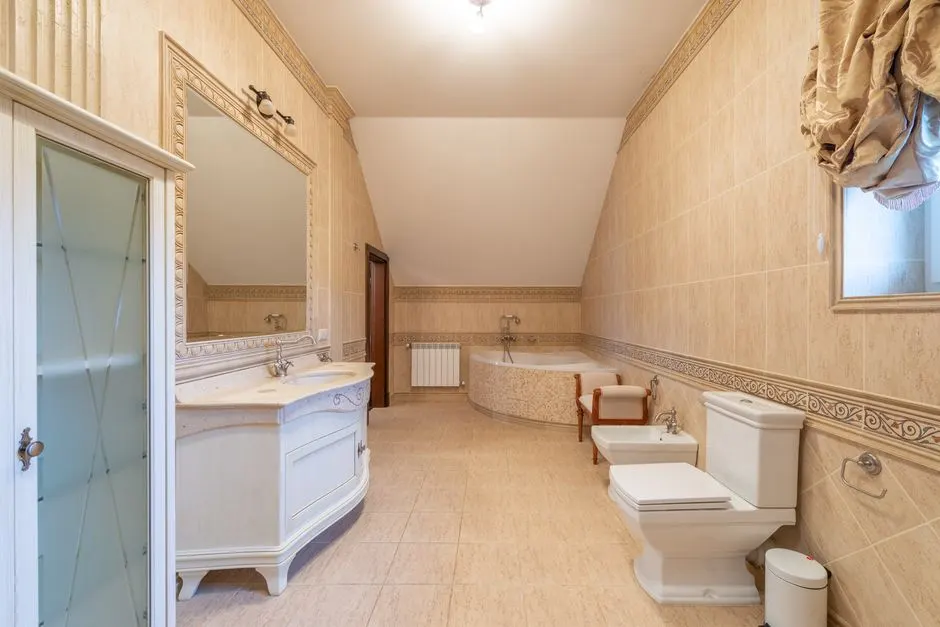
Older Fullerton homes develop hidden mold behind bathroom walls because decades-old plumbing leaks, tile-over-drywall construction, and undersized ventilation trap moisture inside wall cavities where it never dries out. The mold is usually invisible from the bathroom side - it grows on the back of the drywall, on wood framing, and inside insulation, fed by slow drips and humid air that has nowhere to go. This post walks through the specific reasons Fullerton's pre-1980 housing stock is so prone to this problem, the warning signs you can actually see and smell, how to investigate without tearing your bathroom apart, and when it's time to bring in a pro.
The Short Answer: Why Older Fullerton Homes Get Mold Behind Bathroom Walls
Hidden mold behind bathroom walls in older Fullerton homes is a moisture problem that started long before you noticed a stain. Fullerton's housing stock includes thousands of homes built between 1920 and 1975, and most of those bathrooms were framed with paper-faced drywall, galvanized steel supply lines, and cast-iron drains - materials that fail in predictable ways after 40 to 60 years of service.
When a galvanized pipe pinholes inside a wall, it doesn't flood the room. It drips. A single slow leak releasing roughly a cup of water a day puts about 1.8 gallons a week into the wall cavity. Mold needs only 24 to 48 hours of sustained moisture on an organic surface - drywall paper, wood studs, cellulose insulation - to start colonizing. By the time you see a bubble in the paint, the colony behind it is often 2 to 3 square feet.
That's the core of it: old materials, slow leaks, and no airflow inside the wall. Everything below explains how to confirm it and what to do about it.
How Fullerton's Older Housing Stock Traps Moisture Behind Bathroom Walls
Fullerton's older housing stock traps moisture behind bathroom walls because the construction methods used from the 1920s through the 1970s were never designed to dry out. Three specific details matter.
Tile set directly on drywall
In most Fullerton bathrooms built before 1985, ceramic tile was bedded directly onto drywall or, in some 1950s and 1960s builds, onto a mortar bed with no waterproof membrane behind it. Grout and caulk were the only moisture barrier. When grout cracks - and it always does, usually within 8 to 12 years - water wicks straight into the drywall paper. That paper is mold food.
No vapor barrier in the wall cavity
Modern bathroom walls include a vapor retarder behind the substrate. Older Fullerton homes usually don't. That means humid air from every shower migrates into the wall cavity, condenses on the cooler back side of the drywall, and sits there. A family of four taking daily showers can push 2 to 3 quarts of water vapor into those walls every week.
Undersized or missing exhaust fans
Many pre-1980 Fullerton bathrooms either have no exhaust fan or have a 50 CFM unit that should be 110 CFM. A bathroom needs the fan to run 15 to 20 minutes after a shower to clear the humidity. Most people run it for two. The leftover moisture has to go somewhere, and the wall cavity is the path of least resistance.
We see this pattern constantly in the older tracts around Downtown Fullerton, where 1920s bungalows and post-war cottages share the same framing details and the same failure timeline.
The Real Triggers: Leaks, Grout, and Caulk Failures
Moisture problems behind bathroom walls almost always trace back to one of four sources, and in older Fullerton homes you often find two or three at once.
- Supply line pinholes. Galvanized steel and early copper lines corrode from the inside. A pinhole leak behind the shower valve can drip for months before it shows.
- Failed drain connections. Cast-iron drains crack at the hub, and the leak lands on the subfloor and the bottom plate of the wall framing.
- Grout and caulk breakdown. The seam where the tub meets the wall is the number one entry point. Once that caulk fails, water runs behind the tile every shower.
- Toilet wax ring failures. A failed wax ring leaks at the base, saturates the subfloor, and wicks up into the wall behind the toilet.
Any one of these, left alone for a season, is enough to grow a colony. Two of them together - which is common in a 1960s Fullerton ranch home - means the mold is already established by the time you smell it.
Signs of Hidden Mold Behind Bathroom Tile in Fullerton CA
Signs of hidden mold behind bathroom tile in Fullerton CA usually show up as small changes you'd dismiss individually. Together, they tell a clear story.
- A musty smell that doesn't go away. If your bathroom smells earthy even after you clean it, the source is behind the wall, not on the surface.
- Paint that bubbles, blisters, or peels. Moisture pushing through drywall from the back side lifts paint in soft, rounded blisters.
- Tile that sounds hollow or feels loose. Tap along the wall with a screwdriver handle. A dull thud instead of a sharp click means the thinset or mortar has separated - usually because the substrate got wet.
- Dark grout lines or discoloration that returns. If you bleach the grout and the stain comes back in a week, the mold is growing from behind.
- Warped baseboards or a soft spot near the tub. Press the baseboard with your thumb. If it gives, the drywall behind it is compromised.
- Recurring ceiling stains below the bathroom. Water travels down. A stain on the ceiling below is a strong signal the wall cavity above is wet.
One of these alone might be cosmetic. Two or more together, in a home built before 1980, means you're looking at hidden mold growth behind tile in Fullerton. That's the point where a proper look inside the wall is worth the effort.
How to Find Mold Behind Drywall in a Fullerton Bathroom
Finding mold behind drywall in a Fullerton bathroom starts with moisture, not mold. If the wall is dry, there's no active growth - even if there was a colony years ago. So the first step is confirming the wall is wet.
Step 1: Check for moisture with a meter
A pin-type moisture meter reads the percentage of water in the drywall. Normal interior drywall reads 8 to 12 percent. Anything above 16 percent is a problem, and above 20 percent means active mold growth is likely. You can buy a basic meter for $30 to $60 at any hardware store in Fullerton.
Step 2: Look behind the escutcheon plate
Shut off the water, remove the shower valve handle and the round chrome plate behind it, and look at the drywall around the valve body. This is where 70 percent of hidden bathroom mold starts. You'll see dark staining, soft drywall, or visible growth.
Step 3: Pull the baseboard on the wet wall
The bottom 6 inches of the wall behind the tub is where water pools. Pop the baseboard off with a pry bar and look at the back of the drywall and the bottom plate of the framing. If the paper is dark or the wood is stained, you've found it.
Step 4: Cut a small inspection hole if needed
If the meter reads high but you can't see growth, a 4-inch square hole cut between two studs gives you a direct view into the cavity. Patch it with a $6 drywall repair kit when you're done. This is the fastest, cheapest way to confirm what's going on.
If you'd rather not cut into your wall, we offer Mold Inspection Fullerton CA with thermal imaging and moisture mapping that finds the wet zone without demolition.
What to Watch Out For: Common Mistakes Homeowners Make
The most common mistake we see is treating the symptom and not the source. Bleaching the visible mold on the tile or painting over the stain does nothing about the moisture feeding the colony inside the wall. Within 60 to 90 days, it's back.
Other mistakes that make the problem worse:
- Running a space heater in the bathroom. Heat raises the air's moisture capacity, so more vapor migrates into the cooler wall cavity and condenses. You're feeding the mold, not drying the room.
- Caulking over failed caulk. New caulk won't bond to old, dirty caulk. The seam fails again in 3 to 6 months, and now the water has a bigger gap to run through.
- Assuming a small stain is cosmetic. A 2-inch stain on the wall often means 2 to 3 square feet of hidden growth behind it. Mold spreads radially from the moisture source.
- Ignoring the exhaust fan. If your fan doesn't hold a piece of toilet paper against the grille, it's not moving enough air. Replace it with a 110 CFM unit and run it on a timer for 20 minutes after every shower.
- Using a shop vac on visible mold. That aerosolizes spores and spreads them through the house. If the affected area is larger than a dinner plate, don't DIY it.
We also see homeowners in Raymond Hills and the older hillside tracts assume that because their home sits on a slope with good drainage, moisture isn't an issue. Slope drainage handles groundwater. It does nothing about a pinhole leak inside a wall.
When to Call a Professional
Call a professional when the affected area is larger than 10 square feet, when you can smell mold in more than one room, or when anyone in the house has unexplained allergy or respiratory symptoms that improve when they leave. Those three conditions point to a colony that's already releasing spores into your living space.
You should also call if the moisture source is behind tile or inside a wall you can't access without demolition. Finding the leak is half the job - fixing it is the other half, and both have to happen or the mold returns.
Our team handles the full sequence: locate the moisture, contain the affected area, remove the damaged material, treat the framing, dry the cavity to spec, and rebuild. We do this work every week across Fullerton, and we handle Residential Mold Remediation Fullerton CA for exactly this kind of hidden bathroom growth. If you want to know what you're dealing with before you commit to anything, start with testing - our Mold Testing Fullerton CA service tells you the species, the spore count, and whether the air in the rest of the house is affected.
Frequently Asked Questions
How can I tell if there is mold behind my bathroom wall?
A musty smell that returns after cleaning, paint that bubbles, hollow-sounding tile, and a moisture meter reading above 16 percent on the wall are the strongest signs. Any two of those together in a pre-1980 Fullerton home means you should look inside the wall.
Why do older Fullerton homes develop hidden bathroom mold?
Fullerton homes built before 1980 used tile-over-drywall construction with no vapor barrier, galvanized or early copper plumbing that pinholes with age, and undersized exhaust fans. Those three factors trap moisture inside wall cavities for months before it becomes visible.
Can a mold inspection find growth behind bathroom tile?
Yes. A proper inspection uses thermal imaging to find temperature differences caused by moisture, pin-type and pinless meters to confirm wet drywall, and small inspection holes when needed. We can map the full extent of the growth without removing your tile.
Should hidden mold behind a bathroom wall be professionally removed?
If the affected area is larger than 10 square feet, or if the moisture source is inside the wall, yes. DIY removal in those cases spreads spores through the house and leaves the moisture problem in place, so the mold returns within 2 to 3 months.
How much does bathroom mold remediation cost in Fullerton?
Typical 2026 pricing in this area runs $1,200 to $2,800 for a single bathroom wall, including containment, removal, treatment, and drying. If reconstruction is needed after the drywall comes out, add $600 to $1,500 depending on tile and finish.
Get Help with Mold Removal in Fullerton
If you've got a musty bathroom, a soft baseboard, or a stain that keeps coming back, the moisture is still there. We find it, remove the mold, dry the cavity, and put the wall back together - and we'll tell you upfront what it costs before we start.
Call Fullerton Mold Defense at (714) 880-7758 to schedule an inspection. We serve every neighborhood in Fullerton, from the 1920s bungalows near Downtown to the post-war tracts in Amerige Heights, and we handle Mold Removal Fullerton CA for homeowners who want the problem fixed once, not patched.